



Qubit Readout and Control | QRC

COMPATIBLE WITH:

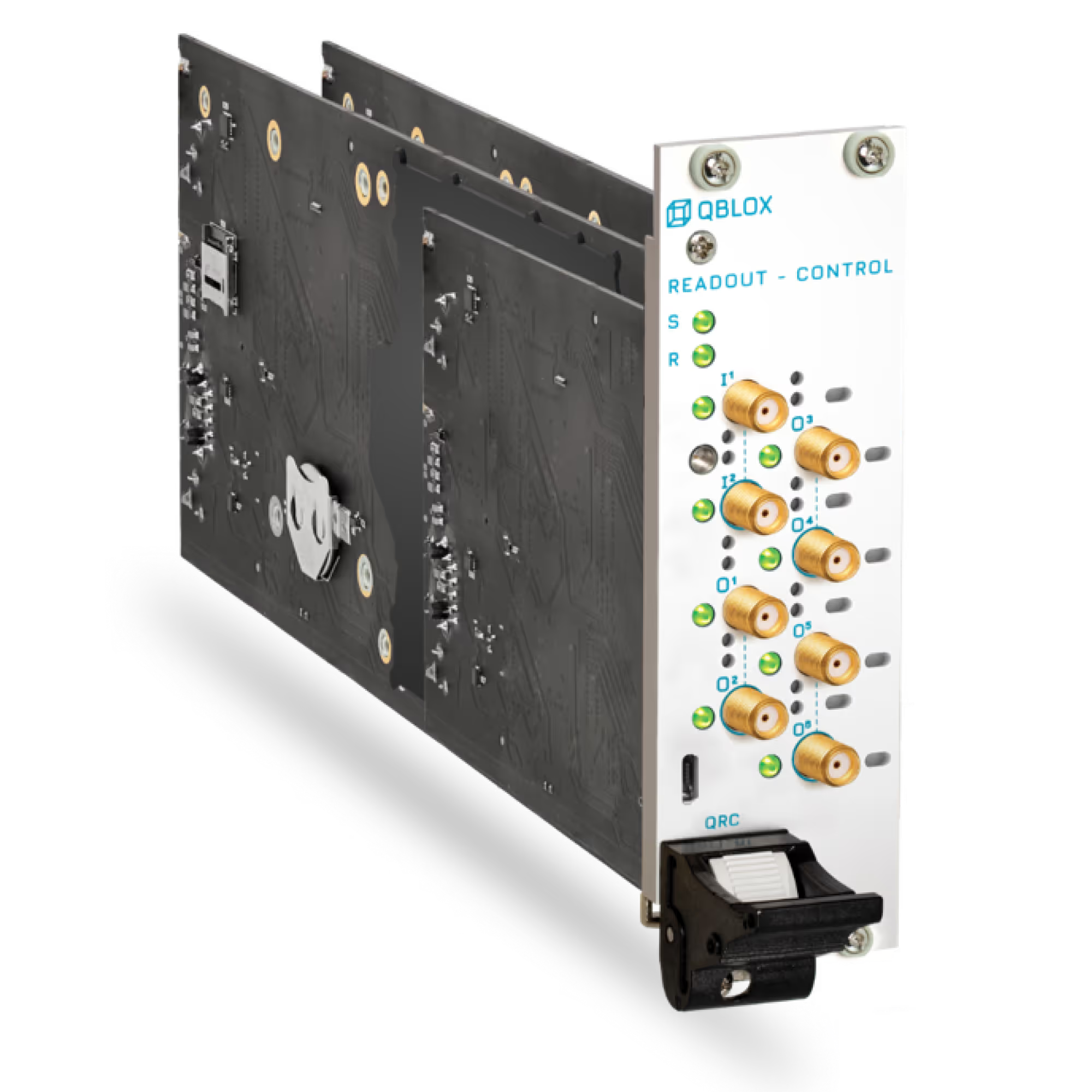
The Qubit Readout and Control (QRC) module is built on advanced RFSoC technology, providing a continuous frequency range from 100 MHz to 10 GHz for the generation of all readout and control signals.

A high channel density RF solution built on a unique DDS and single mixing combination, ensuring accurate operation across the full frequency range without recalibration. Each channel provides >800 MHz instantaneous bandwidth across the entire frequency span, supporting frequency‑multiplexed readout (12 frequencies). Short rise times and low ringing deliver strong time-domain performance, while an excellent signal-to-noise ratio and low phase noise enable high-fidelity gates.

FREQUENCY:
100 MHz to 10 GHz
in - out:
6 Output | 2 Input
SEQUENCE PROCESSORS:
12

QRC key highlights

Covering 100 MHz to 10 GHz, fully independent ports generate all the necessary signals for scalable control and readout for your qubits.
Channel-independent instantaneous bandwidth of >800 MHz.
Unique DDS and single mixing combination ensure high SFDR, exceptional SNR, and full frequency range accuracy without recalibration.
Avoid delays with gapless playback and create the fastest parameter update rate of 4 ns.
Q1 real-time sequencer delivers fully deterministic, reliable performance for complex pulse sequences and measurement loops.
High-level open-source software Qblox Scheduler streamlines easy scheduling, while the assembly layer can integrate with third-party tools.

Using the QRC in the Qblox Cluster

Scalable QRC Cluster Integration

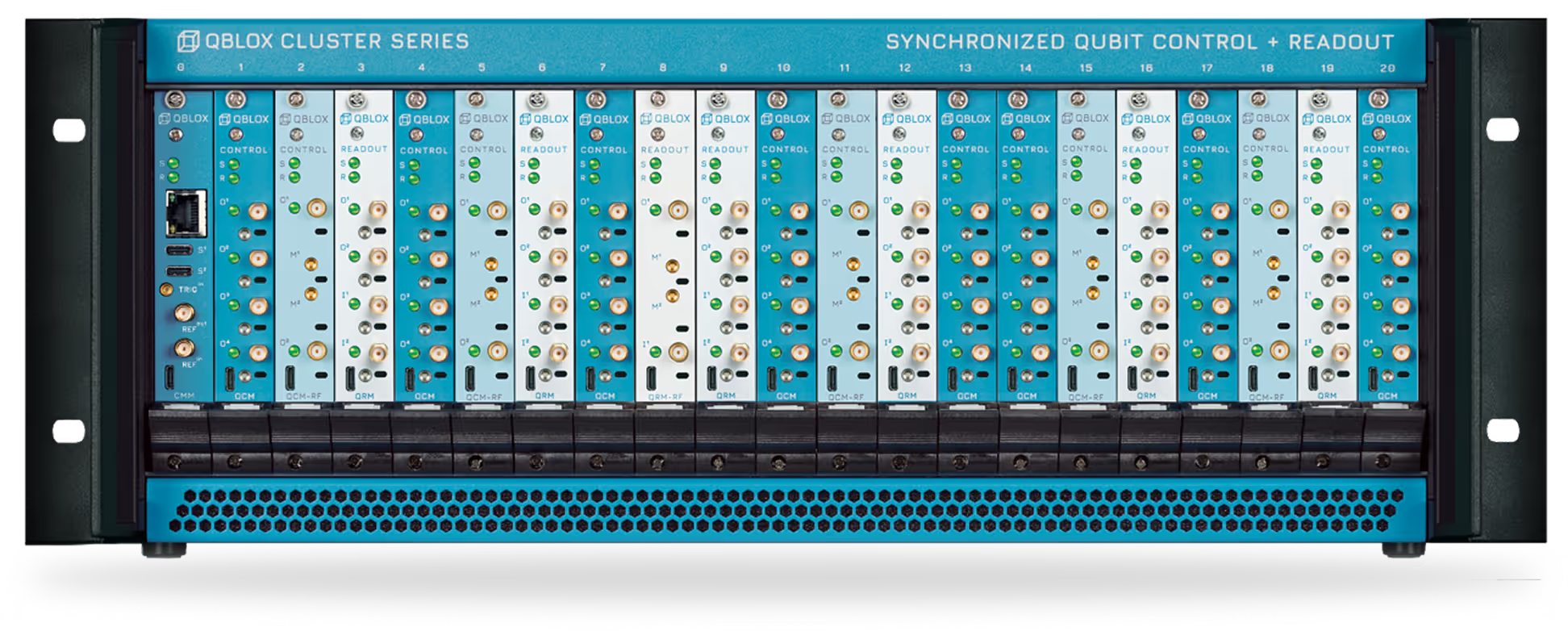
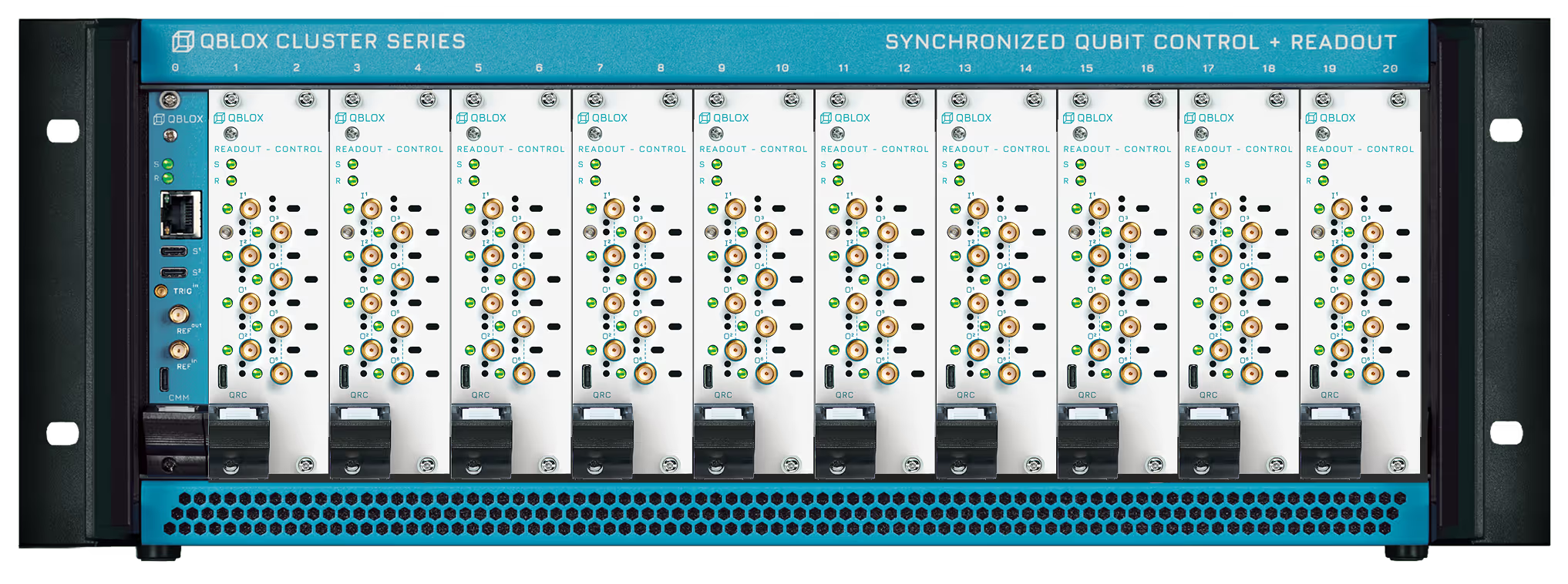
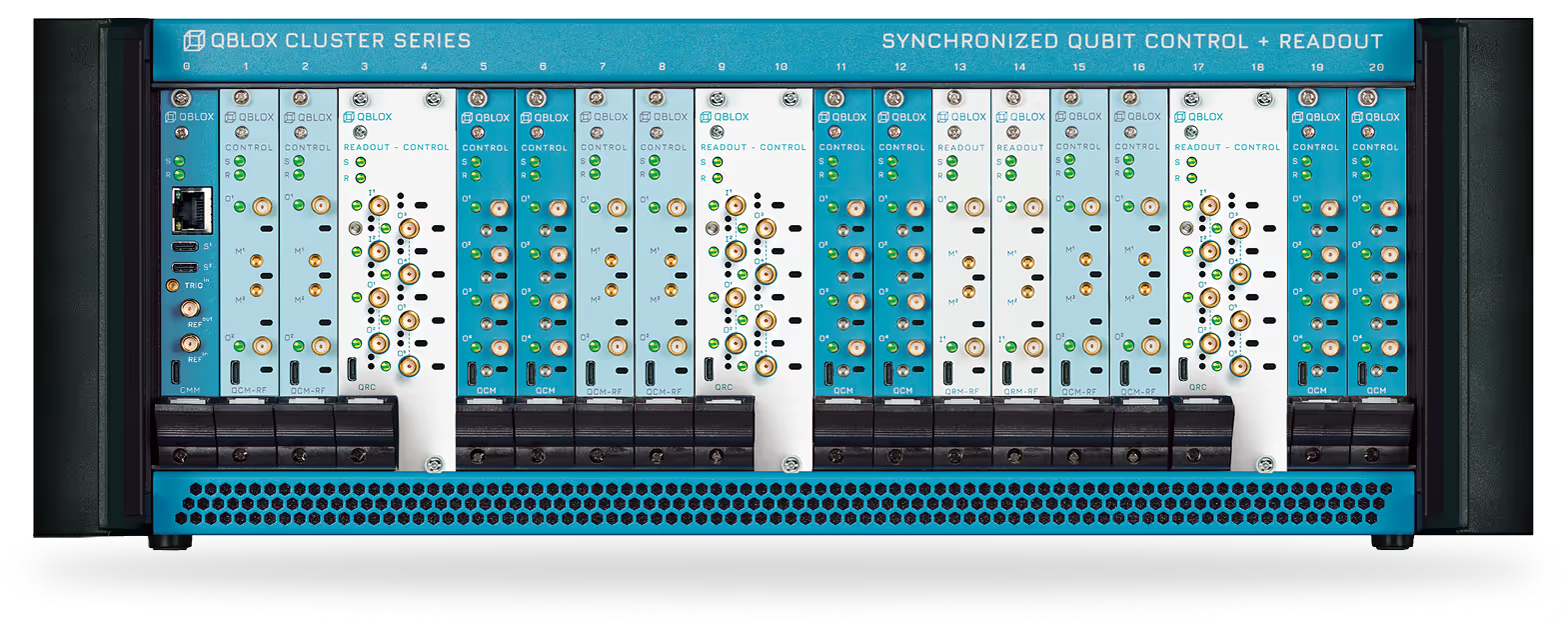
The Qubit Readout and Control Module (QRC) operates within the Qblox Cluster mainframe, offering seamless integration and scalability. A single 19” mainframe Cluster unit can accommodate up to 10 QRC modules, providing up to 80 channels in a 4U mainframe.

Seamless Cross-Module Integration

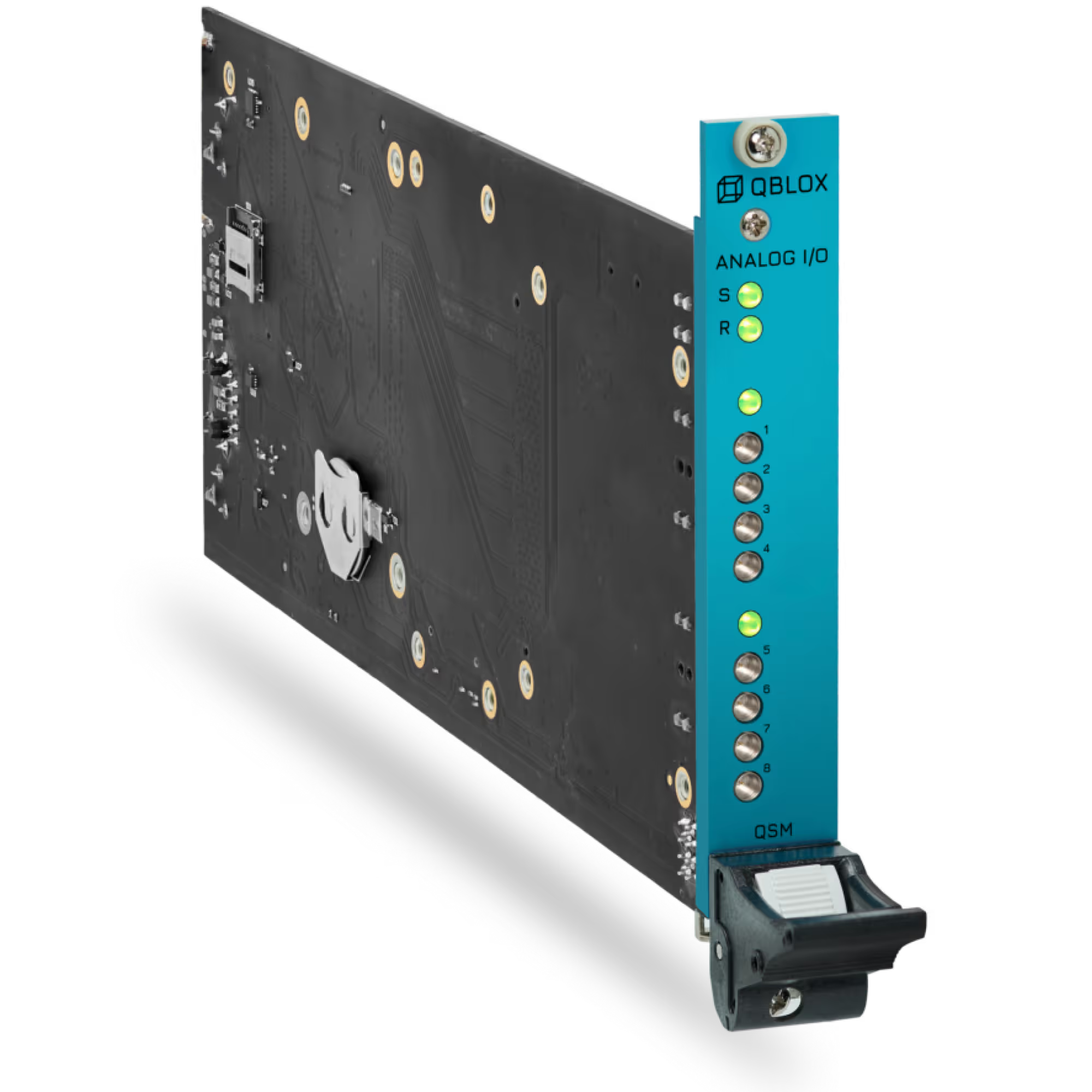
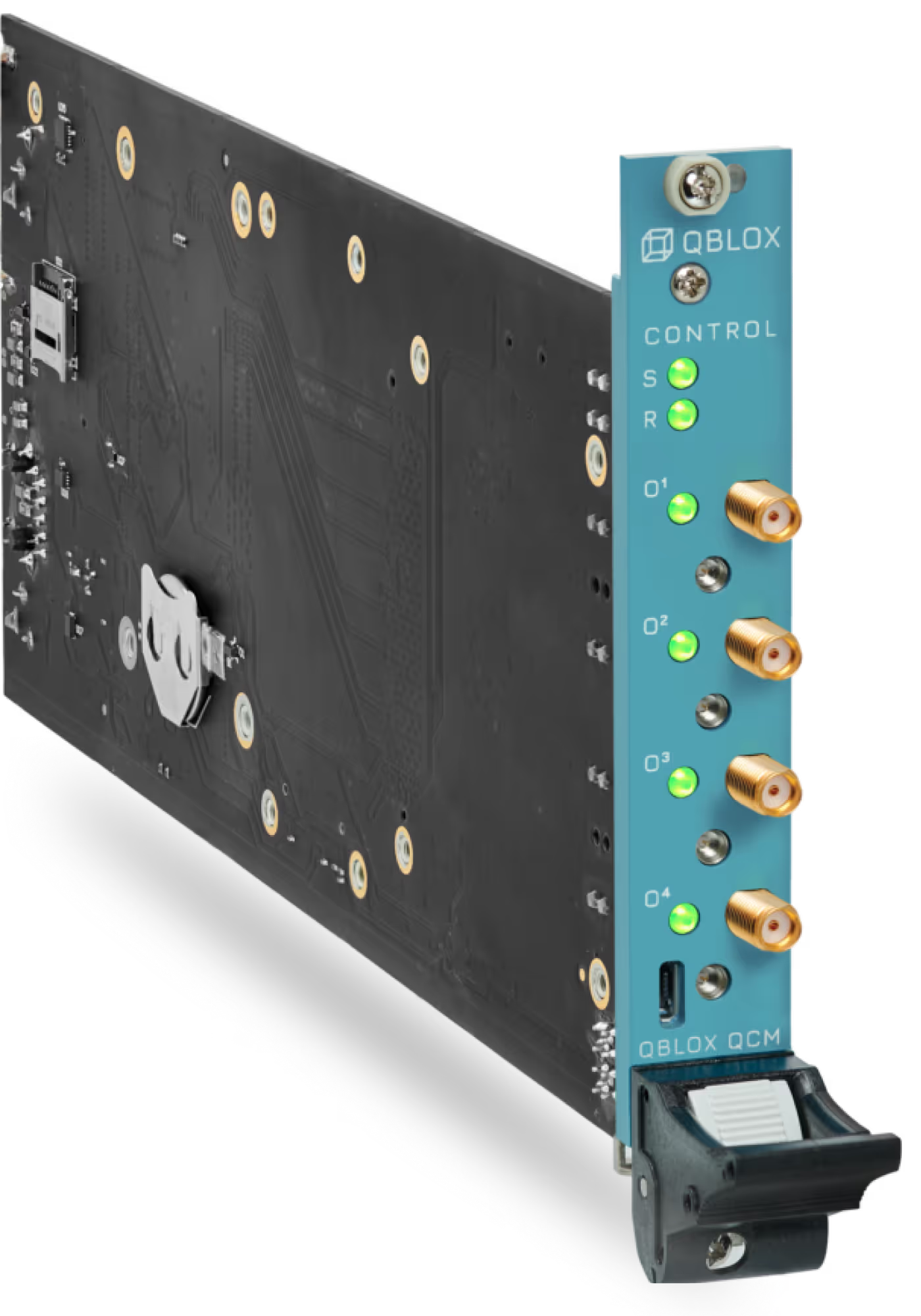
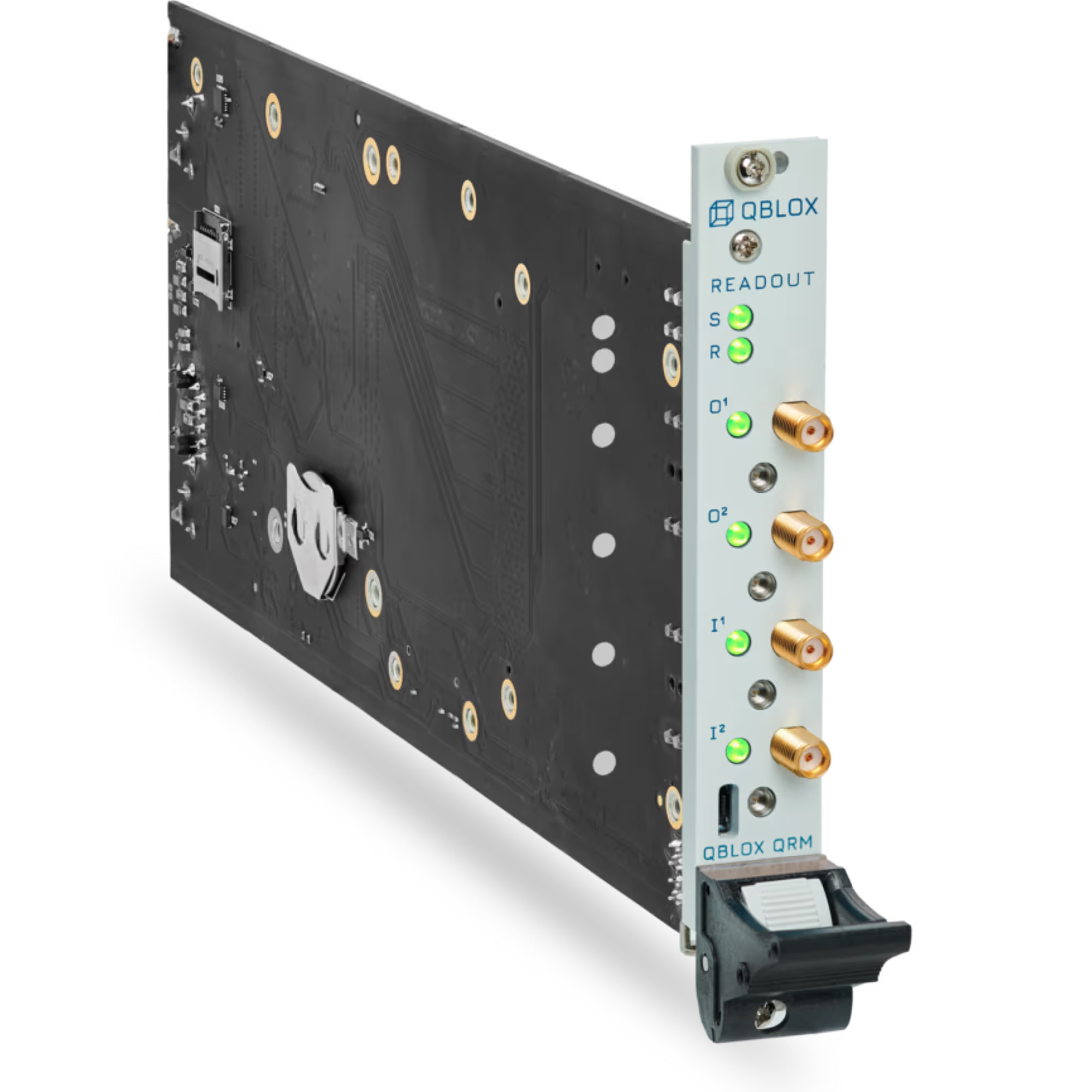
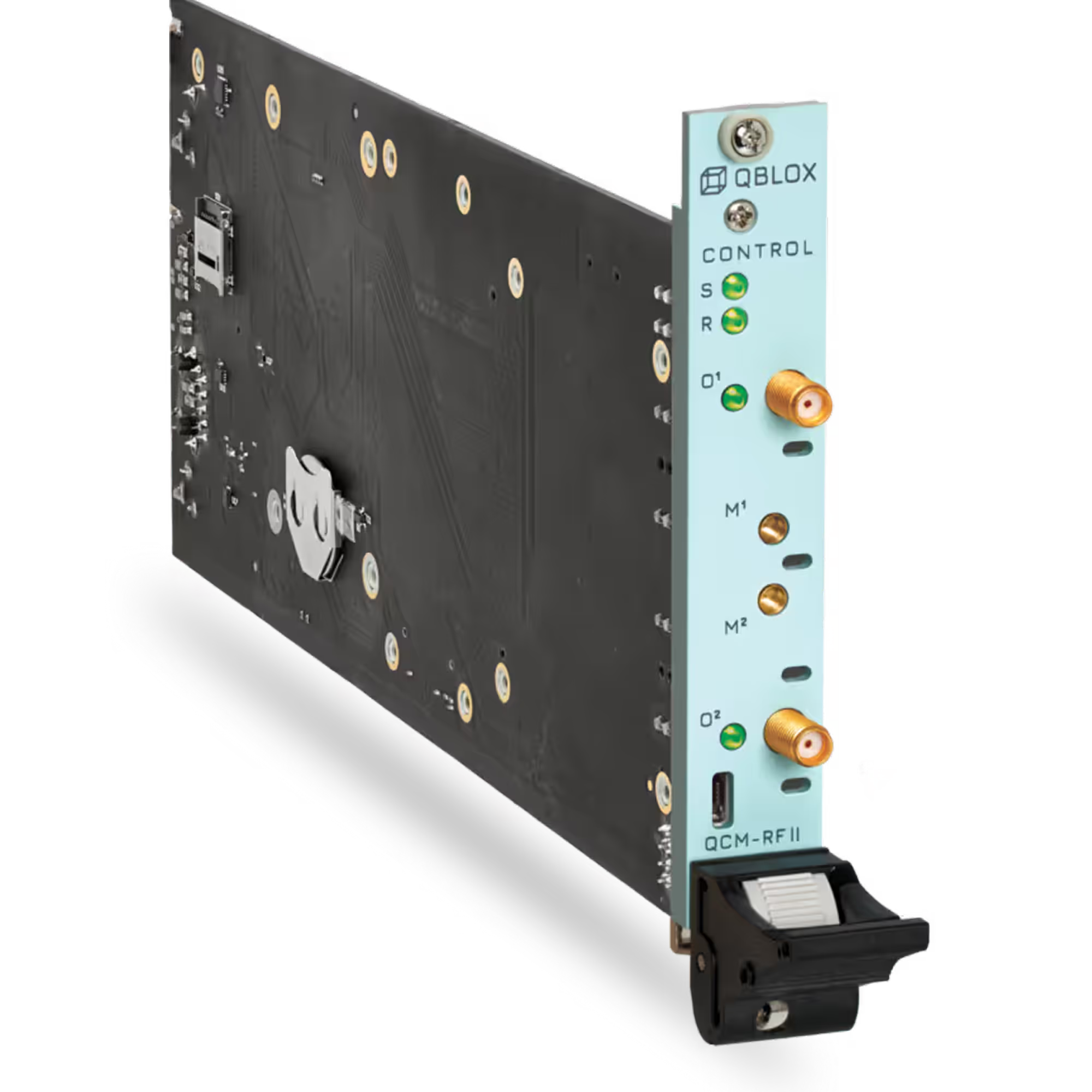
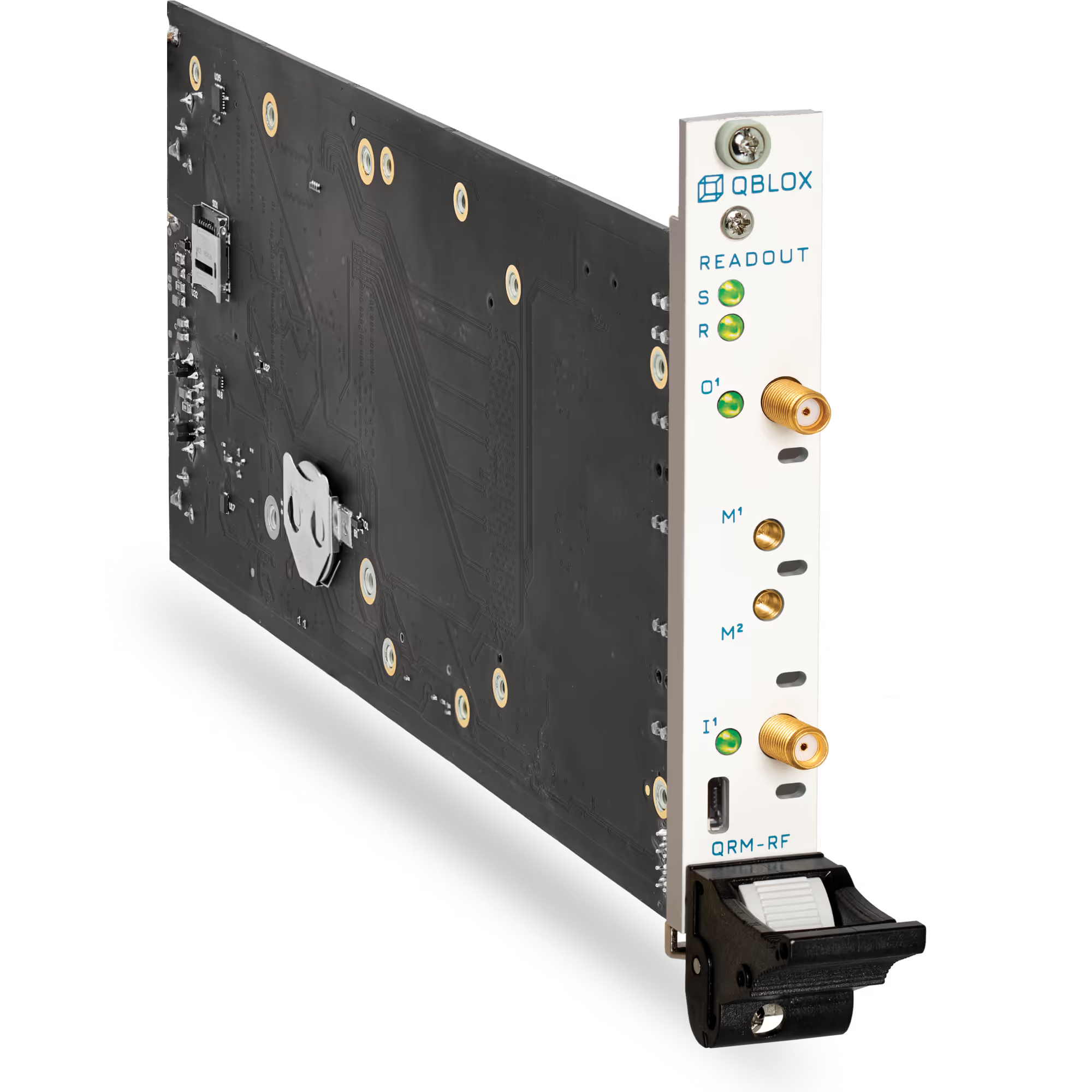
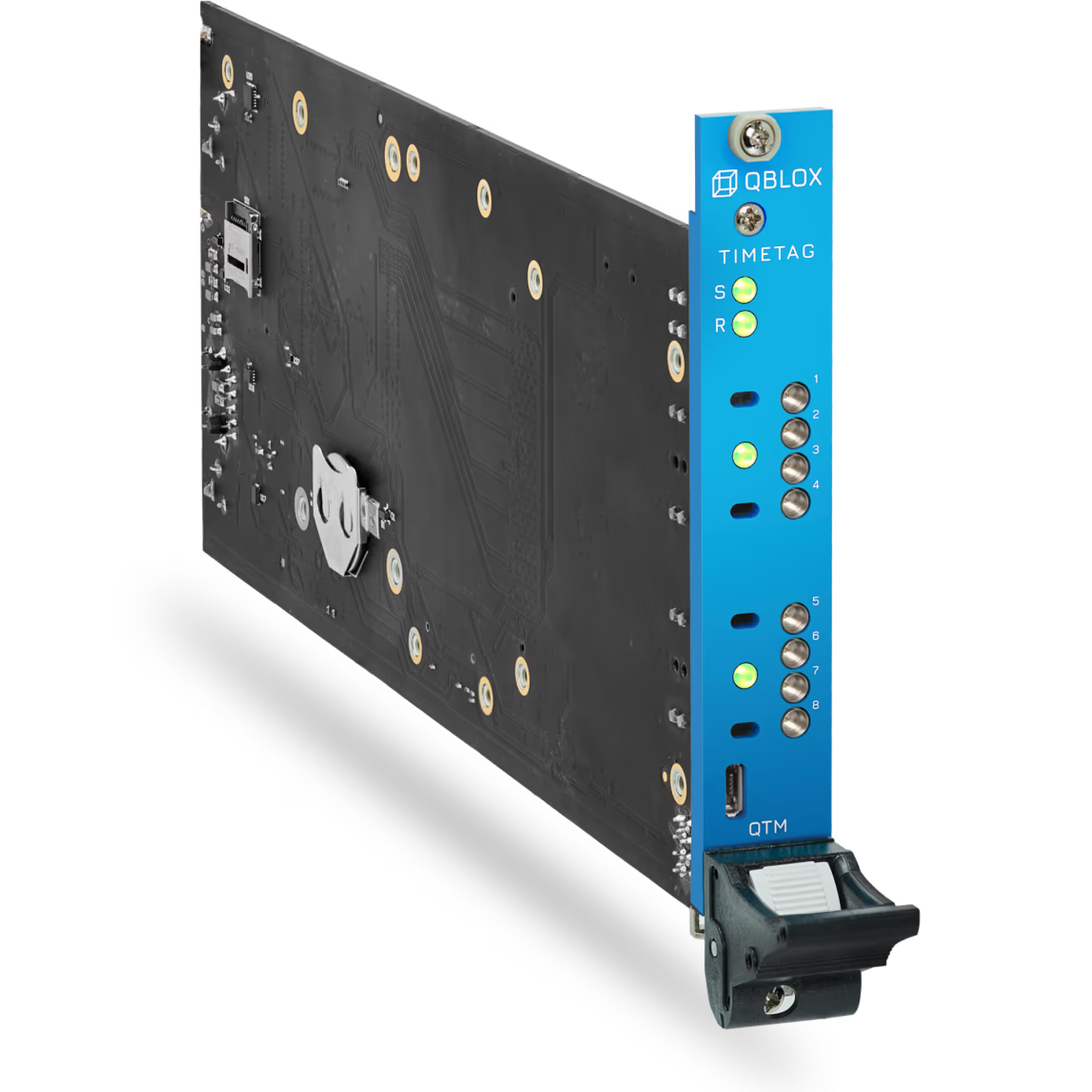
Qblox’s modular architecture allows interoperability between the QRC and other modules, including the Qubit Control Modules (QCM and QCM-RF II), Qubit Readout Modules (QRM and QRM‑RF), and the Qubit Timetag Module (QTM).

SYNQ & LINQ

Using the proprietary SYNQ and LINQ interconnect protocols, all modules communicate and run synchronously. This architecture ensures precise alignment of control, readout, and processing, allowing users to configure a control stack that matches their quantum system and supports high‑fidelity operation.

Trusted by the teams building the quantum future.

As we build integrated multimodal quantum data centers and connect quantum processors directly with HPC infrastructures, transparent, low-level hardware control is essential to delivering scalable, hybrid quantum–classical computing environments. Qblox enables this level of hardware control through Q1ASM, giving us at Qilimanjaro the precision and flexibility needed to advance our analog and digital QPUs."


Marta P. Estarellas
CEO

Qblox support team's expertise and quick response to our queries exceeded my expectations, making the setup process a breeze. Their continuous support allows our PhDs and postdocs to excel in their measurements without worrying about the control electronics. I’m very impressed by Qblox’s commitment to supporting their products and their users."

picture of Christopher Wilson
Dr. Christopher Wilson
Proffesor

Since 2022, Qblox has been a trustworthy partner, providing the qubit-agnostic control electronics essential to our vision. Their Cluster’s SYNQ & LINQ protocols enabled the ultra-low latency required for our fast, parallel qubit characterization. We highly recommend Qblox for their professionalism and innovative approach to quantum computing challenges.'

Vishal Chatrath
CEO

Qblox support team’s expertise and quick response to our queries exceeded my expectations, making the setup process a breeze. Their continuous support allows our PhDs and postdocs to excel in their measurements without worrying about the control electronics. I’m very impressed by Qblox’s commitment to supporting their products and their users."


picture of Halima Giovanna Ahmad
Dr. Halima Giovanna Ahmad
Assistant professor

Since 2021, Qblox has been a vitalpartner in our mission to build a 100-qubitquantum computer for Swedish industry.Their robust, scalable control systemdelivers outstanding analog performance,allowing us to push quantum boundarieswithout hardware limitations. Withunparalleled channel synchronizationand fast real-time feedback, we can fullytune up our 20-qubit systems in under 30minutes."


Giovanna Sammarco Tancredi
Senior Researcher Chalmers

I've been impressed by the technical background and helpful attitude of the team we have supporting us. They are always fast to respond, really helpful and give thoughtful answers. It's fantastic."

picture of Oscar Kennedy
Oscar Kennedy
Senior Quantum Engineer

The QTM delivers state-of-the-art performance for field-deployed quantum communication. It stands out through its immediate reconfiguration via a Python API and seamless integration with the Qblox Cluster. This allows for full orchestration of quantum memories and photon sources—all within a single, unified setup."


Gustavo Castro do Amaral
Quantum Scientist

The Qblox control stack has transformed our lab by replacing four separate pieces of equipment with a single, integrated 'blue box'. By combining RF/MW generation with coincidence detection and timetagging, our students achieve results faster. Combined with their excellent, fast-response support, Qblox is essential for our state-of-the-art research."


Ronald Hanson
Professor

Qblox cluster is certainly one of the most important elements in our new spin qubit lab. The easy-to-use and compact system allows us to set up a spin qubit control system within a couple of hours. We have used it for the RF reflectometry readout of our first in-house quantum dot! I look forward to getting more exciting results by using the Qblox cluster. What I also appreciate is the good communication and friendship between Qblox and the customers."


Tzu-Kan Hsiao
Professor

Explore more products

Let’s build quantum, together!

Want to accelerate your quantum computing research and development?
BOOK A meeting
Prioritize your qubit research
High fidelity qubit control
Future ready system
Covering 100 MHz to 10 GHz, fully independent ports generate all the necessary signals for scalable control and readout for your qubits.
Channel-independent instantaneous bandwidth of >800 MHz.
Unique DDS and single mixing combination ensure high SFDR, exceptional SNR, and full frequency range accuracy without recalibration.
Avoid delays with gapless playback and create the fastest parameter update rate of 4 ns.
Q1 real-time sequencer delivers fully deterministic, reliable performance for complex pulse sequences and measurement loops.
High-level open-source software Qblox Scheduler streamlines easy scheduling, while the assembly layer can integrate with third-party tools.

Advancing qubit readout and control

Frequency range comparison chart showing QRC covering a continuous range from 100 MHz to 10 GHz with an 800 MHz bandwidth, DDS and Mixer covering segmented ranges within this spectrum.

Combining the best of direct digital synthesis (DDS) and analog mixing technology, the Quantum Readout and Control (QRC) module represents a groundbreaking advancement in quantum control. By leveraging the high-frequency capabilities of DDS, the QRC eliminates the need for a second mixing stage as compared to the double super heterodyne technique (DSH), preserving the calibration-free advantage of DSH while reducing phase noise.

The QRC module ensures channel-independent frequency range coverage without gaps, providing maximum user flexibility. With its design, users can effortlessly select a primary operating frequency. The hardware will then automatically adjust the settings to provide the full bandwidth immediately available around the chosen center frequency.

Discover more in the blog

Using the QRC in the Qblox Cluster

The Qubit Readout and Control Module (QRC) operates within the Qblox Cluster mainframe, offering seamless integration and scalability. A single 19” rack Cluster unit can accommodate up to 20 QCM modules, providing density for up to 80 baseband channels.

Qblox’s modular architecture allows interoperability between the QRC and other modules, including the Qubit Control Modules (QCM and QCM-RF II), Qubit Readout Modules (QRM and QRM‑RF), and the Qubit Timetag Module (QTM). Using the proprietary SYNQ and LINQ interconnect protocols, all modules communicate and run synchronously. This architecture ensures precise alignment of control, readout, and processing, allowing users to configure a control stack that matches their quantum system and supports high‑fidelity operation.

Unique patented protocols to create scalable systems that function as a single unit

SYNQ protocol guarantees synchronization of all channels, with ps-level jitter and great phase coherence for precise qubit control and the highest fidelities.

LINQ protocol provides fast, scalable feedback with all-to-all connectivity for conditional playback and conditional branching.

Specifications

Output Channels

Output frequency range
100 MHz - 10 GHz
Number of output channels
6
Max number of carrier frequencies per output channel
8
Analog bandwidth
800 MHz
Max output power
+5 dBm
DAC vertical resolution
14 bits
DAC sampling rate
5 GSa/s
SFDR (excluding harmonics)
-50 dBc (typical)
Max output power
+5 dBm
Phase noise
-108 dBc/Hz at a 10 kHz
offset at 6 GHz
Carrier-to-noise density ratio
150 dB ⋅ Hz
Mute switch isolation
50 dB
Number of digital outputs
1

Input Channels

Input frequency range
100 MHz - 10 GHz
Number of input channels
2
Max number of carrier frequencies (total)

8
Analog bandwidth
800 MHz
Input power
-53 to +6 dBm
ADC vertical resolution
14 bits
ADC sampling rate
5 GSa/s

General Specifications

Number of pulse processing units
12 sequencer cores
Parameter update rate
(Amplitude, offset, frequency, phase)
4 ns
NCO frequency step size
0.25 Hz
Waveform and parameter granularity
1 ns
Module to module skew
<1 ns
Channel to channel skew
<600 ps
Connector type
SMA for analog outputs
SMP for digital outputs
Power supply
via Cluster mainframe
Reference clock
10 MHz via Cluster
mainframe or external
clock